

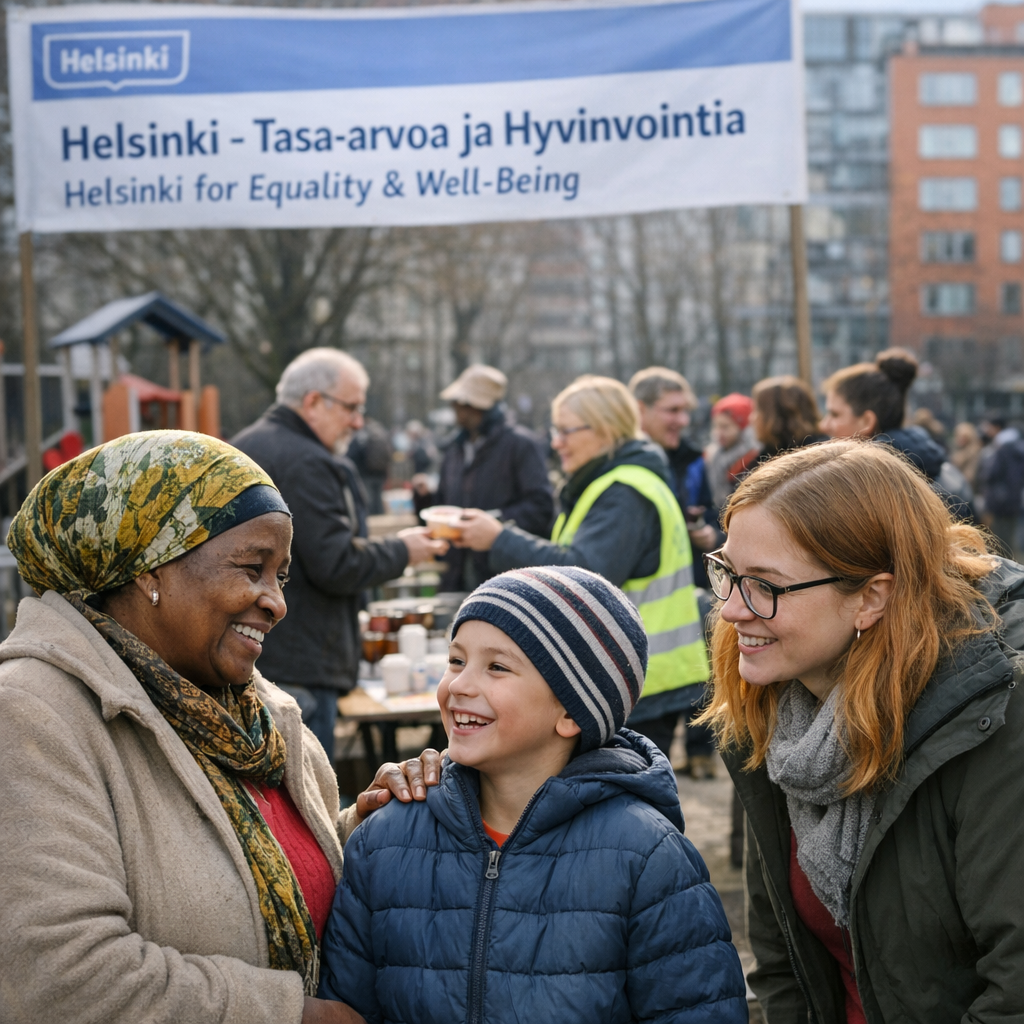
Helsinki is actively pursuing strategies to reduce inequality and enhance the well-being of its residents. The city’s 2025–2029 strategy emphasizes ‘Widespread Wellbeing,’ aiming to ensure that all residents, regardless of background, can lead fulfilling lives and feel a sense of belonging. This commitment involves combating regional segregation and inequality, with a particular focus on supporting children and young people. Source
Despite these efforts, challenges persist. The Helsinki Safety Survey indicates that while 90% of residents feel safe overall, feelings of insecurity have increased, especially during weekend evenings in certain districts. Witnessing violence and drug use contributes significantly to this sense of unease. Source
To address these issues, Helsinki has implemented measures such as the ‘Toivo’ unit within child welfare services, targeting young individuals facing challenges related to crime and substance abuse. Additionally, the city is enhancing cooperation with the Helsinki Police Department to prevent youth crime and reduce disturbances caused by drug use. Source
Furthermore, Helsinki is investing in community engagement initiatives like participatory budgeting through the OmaStadi program, allowing residents to propose and vote on projects that directly impact their neighborhoods. Recent projects include the development of saunas, green spaces, and activities for young people, reflecting the community’s priorities. Source
By combining strategic planning with active community involvement, Helsinki continues to work towards a more inclusive and equitable city for all its residents.