

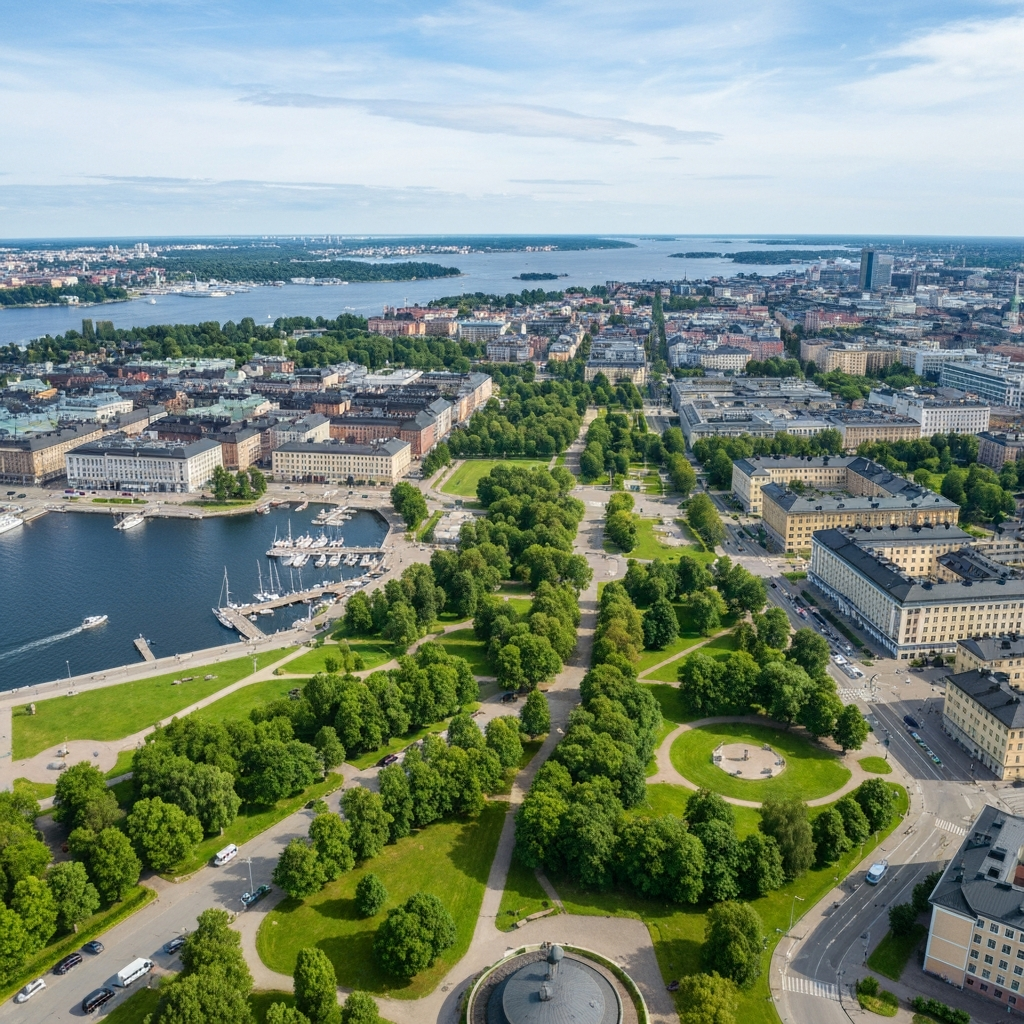
Helsinki has made significant strides in environmental sustainability, focusing on reducing greenhouse gas emissions, expanding nature reserves, and enhancing climate adaptation measures.
Emission Reduction Achievements
In 2024, Helsinki’s greenhouse gas emissions from residents, services, and industry decreased by 16% compared to the previous year. This progress is attributed to the reduction in coal usage and the adoption of innovative heat production methods, such as heat pumps, leading to a 27% decrease in district heat emissions. Additionally, emissions from electricity consumption dropped by 14%, even though overall electricity use increased by 5%.
Expansion of Nature Reserves
To preserve biodiversity, Helsinki established five new nature reserves in 2024. The city aims to protect 10% of both its land and water areas by 2038, planning to double the area of protected land and increase protected sea areas tenfold. This initiative underscores Helsinki’s commitment to conserving its unique urban nature.
Enhanced Climate Targets
Aligning with its new City Strategy, Helsinki has updated its climate programme, setting a more ambitious goal to reduce direct greenhouse gas emissions by 85% by 2030 compared to 1990 levels. The city maintains its net-zero target for 2040, focusing on local emission reductions and climate change preparedness.
Adaptation to Climate Change
Recognizing the accelerating pace of climate change, Helsinki is investing in adaptation measures to ensure a viable living environment for its residents. The city is preparing for extreme weather events and related risks by enhancing its climate resilience and implementing strategies to mitigate potential impacts.
Through these comprehensive efforts, Helsinki continues to demonstrate its dedication to environmental sustainability, setting a benchmark for urban centers worldwide.