

By Maija Korhonen
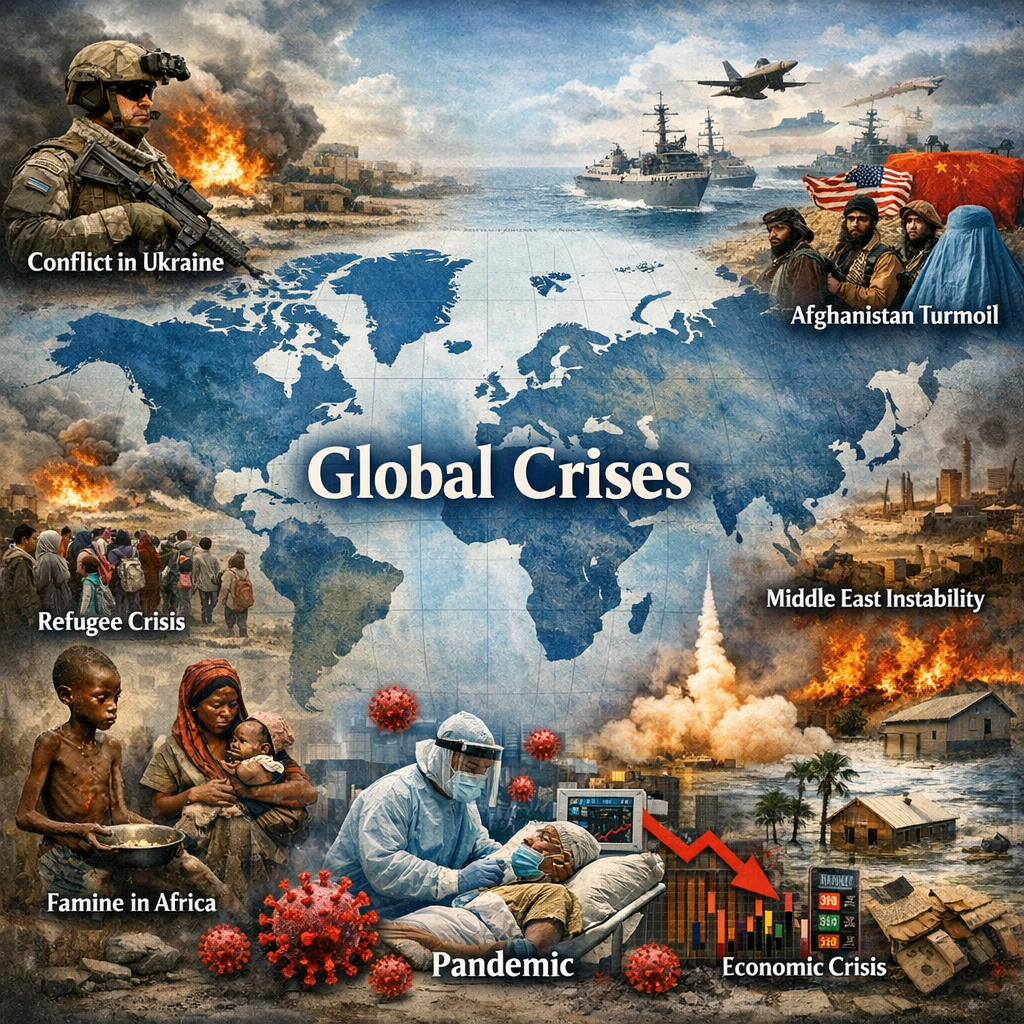
From the heart of Helsinki, watching world news unfold can feel like peering through a glass wall: distant, but not detached. Global crises—armed conflicts, climate change, magnetic shifts in geopolitical influence—underpin much of the uncertainty we see. These are not remote issues; they ripple outward, reshaping trade, migration, aid, climate policies, and geopolitics in Europe and here at home.
What’s Driving Global Risk?
A recent Global Risks Report asked over 1,300 experts where the world is heading. Their verdict: uncertainty dominates. Geoeconomic confrontation—rivalries between major economies using sanctions, trade barriers or strategic alliances—is now seen as the top short-term risk. It’s not just about political differences, but about how these tensions could disrupt global supply chains, energy access, and investment flows. Multilateral cooperation, once the backbone of stability, is weakening under mounting pressure. Other major risks: economic downturns, inflation, and fragile state institutions. These risks aren’t isolated—they’re deeply interconnected.
Armed Conflict Peaks
The number and intensity of active armed conflicts around the world are eye-opening. The Armed Conflict Survey noted that conflicts such as those in Gaza, Ukraine, Sudan, and Myanmar persisted, while a new flashpoint emerged in conflicts involving Israel and Iran. Global fatalities from violence rose sharply. These wars breed humanitarian crises—displacement, food insecurity, breakdown of public health—and strain international systems trying to respond.
The Climate-Migration Nexus
Climate change is no longer a problem for tomorrow; it’s reshaping patterns of human movement today. A chapter within the World Migration Report 2026 argues our responses are still reactive rather than proactive. Climate mobility is rising because of both sudden disasters and longer-term environmental degradation. Yet policies too often overlook local realities—especially for marginalized communities already facing overlapping challenges of poverty, conflict, or marginalization.
The World Bank estimates that up to 216 million people could be internally displaced by climate impacts by mid-century, especially in lower-income countries with exposed coastlines, overtaxed agriculture, or weak infrastructure. Many won’t cross national borders, but these internal shifts still test national safety nets, public services, and local governance.
Why It Matters for Finland and Beyond
It’s easy to see these as issues happening “elsewhere.” But Finland and the Nordic region are not immune.
- Evolved migration pressures: Climate-related displacement will increase migration pressure toward Europe. Although most migration will be internal to Africa, Asia or Latin America, policy decisions here—about asylum, aid, and integration—will shape many lives.
- Supply chain exposure: Disruptions in trade—whether due to war, sanctions, or climate disaster—affect energy, raw materials, food imports and exports. Higher costs, instability in global markets, all find their way to Helsinki’s grocery stores, and our energy bills.
- Geopolitical alignments: With great-power competition on the rise—between economic blocs, over energy routes, over maritime chokepoints—we’ll likely see Finnish foreign policy under pressure: to choose sides, protect neutrality, or join alliances more tightly.
- Climate adaptation and aid: Finland’s role as a partner in development and climate financing becomes more urgent. Supporting local, context-aware strategies abroad—as in the IOM’s recent work—can help reduce causes of forced migration while promoting global stability.
What Can We Do?
Being globally aware doesn’t just mean consuming news—it means actions and policies that reflect interconnectedness.
- Encourage transparent government aid policy: Support Finland’s foreign aid efforts that prioritize long-term climate adaptation and preventive conflict resolution.
- Invest in resilient supply chains: Diversify trade partners, invest in renewable energy and infrastructure that can handle disruptions.
- Support local integration: Communities in Finland will continue to receive migrants and refugees; integrating newcomers wisely benefits both newcomers and established residents.
- Stay informed and engaged: Inform public discourse with facts—not fear. Global risks deserve attention, not alarmism.
We may not control global events, but we live amid them. Understanding the patterns—of conflict, climate, migration, economic tension—lets us make more thoughtful decisions, locally and nationally.
Within uncertainty lies possibility. We can shape outcomes—if we are informed, engaged, and ready.