

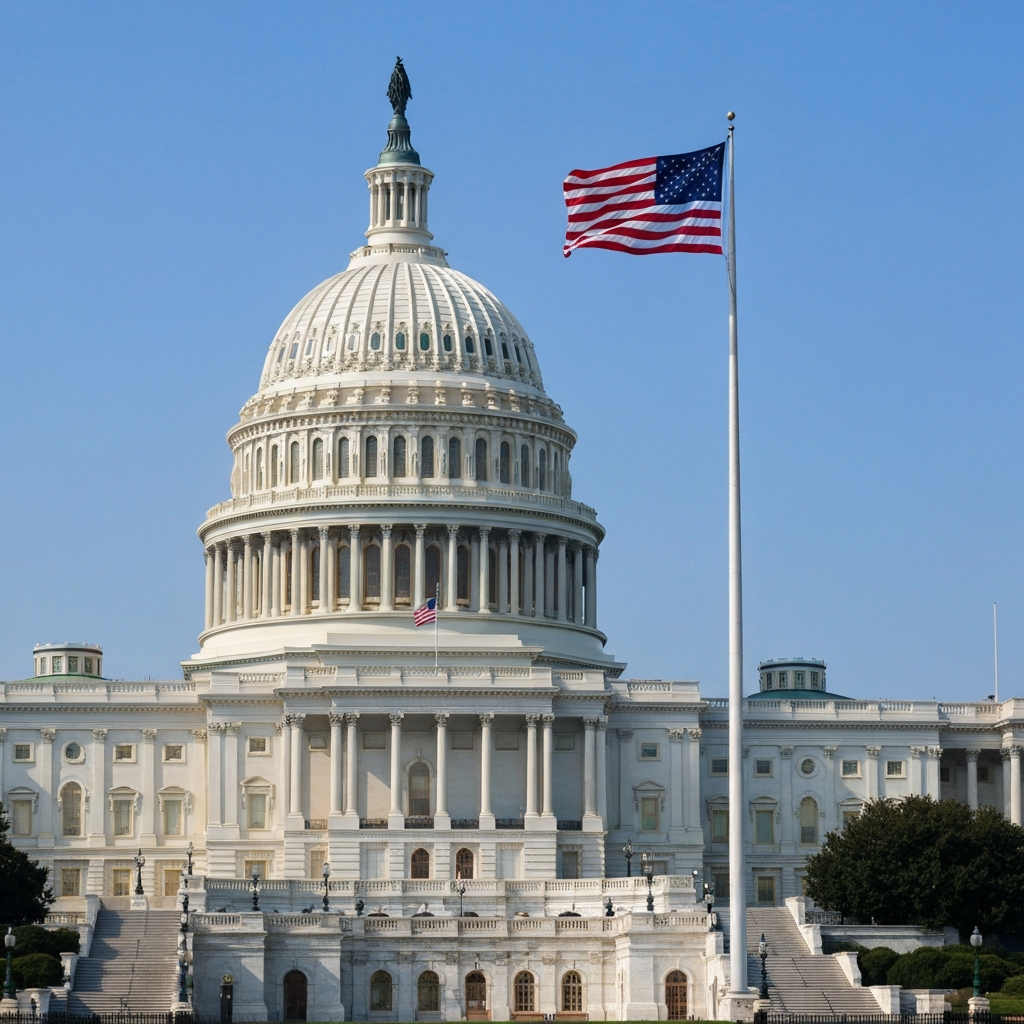
The United States, a nation of over 340 million people, operates under a federal government system characterized by a separation of powers among three branches: legislative, executive, and judicial. This structure is designed to ensure a balance of power and prevent any single branch from becoming too dominant.
Political Structure
The legislative branch, known as Congress, is bicameral, consisting of the House of Representatives and the Senate. The House’s representation is based on state populations, while the Senate provides equal representation for each state, with two senators per state. This design balances the interests of both populous and less populous states.
The executive branch is headed by the President, who serves as both the head of state and government. The President’s responsibilities include enforcing laws, conducting foreign policy, and serving as the commander-in-chief of the armed forces.
The judicial branch, led by the Supreme Court, interprets laws and ensures they align with the Constitution. This branch plays a crucial role in maintaining the rule of law and protecting individual rights.
Economic Overview
The U.S. boasts a highly developed and diversified market-oriented economy, accounting for approximately 26% of global economic output. In 2025, the Gross Domestic Product (GDP) reached $30.8 trillion, with a real GDP growth of 2.2% from the previous year. This growth reflects the resilience and dynamism of the American economy.
Key sectors driving the economy include technology, financial services, healthcare, and consumer spending. The U.S. is home to numerous multinational corporations and remains a global leader in innovation and entrepreneurship.
In the first quarter of 2026, the U.S. economy grew at an annualized rate of 2%, rebounding from a sluggish 0.5% in the last quarter of 2025. This growth was supported by recovering conditions post-government shutdown and robust investment in artificial intelligence (AI). However, the outlook is clouded by geopolitical tensions, such as the conflict in Iran, which has led to increased energy prices and inflation concerns.
Understanding the U.S. political system and economic landscape provides valuable insights into the nation’s role on the global stage and its influence on international affairs.